Join Our News Letter
Get started today before this once in a lifetime opportunity expires.
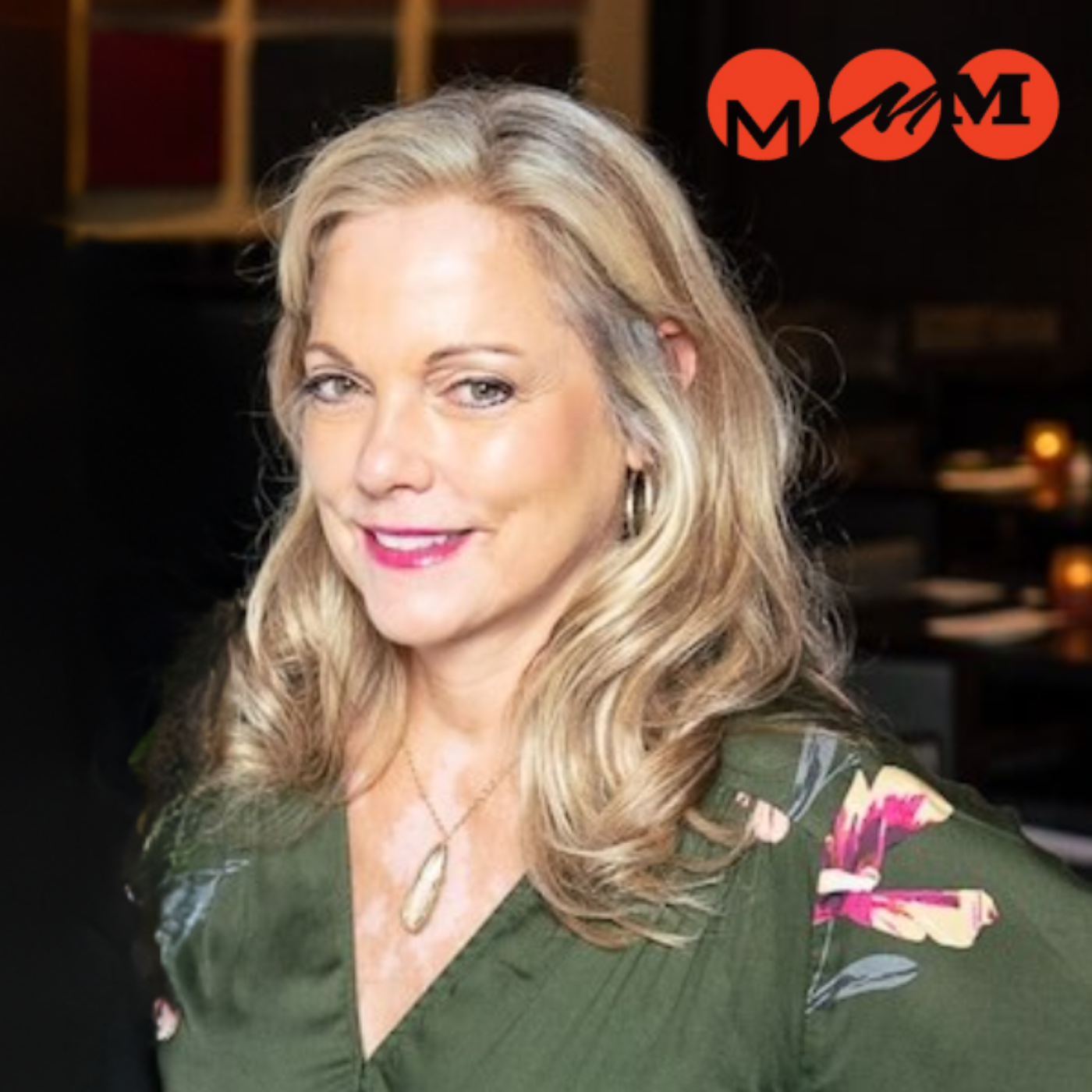
Jennifer McNevin – Co-Owner of Manuel’s Restaurant
By Justin McCullough
Family owned with multiple locations, Jennifer tells us about trusting the customer to grow your business. Starting with a dream and working hard worked until a critical moment in the business forced them to overcome like never before.
Overview
In the latest episode of the podcast, Justin interviews Jennifer McNevin, the owner of three successful restaurants in Austin, Texas. Jennifer shares her inspiring journey from starting her first restaurant with borrowed funds to expanding her business strategically over a decade. She discusses the challenges she faced, including a significant setback during 9/11, and how innovative community engagement helped her business thrive. Emphasizing the importance of team engagement, Jennifer highlights her philosophy of making her staff ambassadors of the brand and educating them on broader business operations. The conversation also touches on the impact of small businesses on local economies and the need for greater governmental support. Justin underscores Jennifer's customer-focused approach and the significance of building relationships in business, encouraging listeners to foster community connections rather than retreat during tough times.
Show Notes
Click timestamps to jump directly to that point in the episode.
- Podcast host Justin McCullough introduces Jennifer McNevin, owner of 3 restaurants in Austin
- Jennifer runs two Manuel's locations and one Chongo's Taqueria location
- The business employs about 150 people across all three locations
- Started small with no family money, borrowing on credit cards to fund the first restaurant
- Expanded to second location after 10 years following customer demographic shifts
- Purchased second location when they found another restaurant struggling
- Second location was twice the size of downtown location with free parking
- The new location was profitable from day one of operations
- Faced major setback during 9/11 when adjacent movie theater closed for 3 years
- Implemented 'guerrilla marketing' by getting into the community
- Increased community outreach and participation in charitable events
- Jennifer shares with staff that she worked 5 years before taking any profit
- Published the company story on the back of restaurant menus
- Views herself as both an employer and educator for her staff
- Focuses on making team members ambassadors of the business
- Shares business operations knowledge beyond just job-specific duties
- Highlights that 60-70% of Americans are employed by small businesses
- Discusses challenges in finding support during tough times
- Emphasizes that approximately 70% of money spent at small businesses stays in the local community
- Advocates for more government support for small businesses
- Justin emphasizes customer-focused decision making in Jennifer's approach
- Importance of helping staff understand the bigger picture of the business
- During hardships, expanding community involvement rather than retreating proved successful
- Relationships and connections matter more than just brand visibility
- Encourages listeners to stimulate relationships rather than isolate
Show Transcript
Justin McCullough [00:01] – What do you do when it's your turn to lead? Well, that's a great question. The Vision, Values, and Velocity podcast is all about a better way of thinking and how to get you where you are now to where you want to be as quickly, confidently, and intentionally as possible so you can make an impact at work, home, and life. Hey, this is Justin McCullough. This is my show. Thanks for being here. You know, my goal is to give you the encouragement, clarity, and confidence to tackle whatever your next big thing is, whether that's listening, leading a team or running a business or taking on a new project. And I'm certain stories like these are going to help you along your way. So why don't you join me and listen in to the leadership traits of Jennifer McNevin.
Justin McCullough [00:40] – She's the owner of three restaurants in Austin, Texas. And, you know, this is a great episode about entrepreneurship. So listen close, take some notes, and I'll see you on the other side of this interview.
Justin McCullough [00:55] – And we're at the Small Business Festival, and I'm here with Jennifer. Jennifer, why don't you tell us a little bit about who you are in your business?
Jennifer McNevin [01:01] – Well, hi, Justin. Thanks so much. I'm Jennifer McNevin, and I am with Manuel's and Chongo's restaurants. We are a local restaurant here in Austin. We have two Manuel's locations and one Chongo's Taqueria location.
Justin McCullough [01:18] – So three in total. A little busy, I bet.
Jennifer McNevin [01:21] – A little bit busy, yes.
Justin McCullough [01:23] – Is it difficult to juggle multiple locations?
Jennifer McNevin [01:26] – It is, in fact, difficult. It's something that you really have to get used to. But most people in small business, you know, they start out small, and the dream is that you would like to expand your business over time. So we've been very fortunate. We've been able to do that. At this point, we have about 150 employees here in Austin and the three locations. So, yes, it does keep us busy.
Justin McCullough [01:55] – You know, I just pictured somebody on the other end of that screen going, that's what I want. I want to have a couple hundred employees. I want to have a couple of locations. Help us understand. How did you get there?
Jennifer McNevin [02:06] – We got there. We started the first one right here on Congress Avenue in Austin. We're still owned by our family and one other family. So it's just the two of us. And basically, we started small. We didn't have any family money. It was just ourselves and working hard. Actually borrowed some money on a credit card to open the business and had a little bit of savings, not much and just went from there. It really started with a dream, like all small businesses do. I think one of the great things about our country and Austin also is that when you have a dream, it doesn't really matter what your parents did or whether you have a college degree or not. If you have a dream to have your own business, and if you work hard in America, you know you can do that.
Justin McCullough [03:06] – I agree. That's what we're all hoping for, right? So many of us have a vision and a dream, and we want to.
Justin McCullough [03:11] – Make that a reality.
Justin McCullough [03:12] – So clearly you've done it. You've made it a reality. How did you go from 1 to 2 and then 3?
Jennifer McNevin [03:18] – We opened the first one and had a really good customer base. And then after about 10 years, we noticed that as were getting a little bit older, our customers were also getting a little bit older, and they were getting married and having kids and moving to the north side of town. So we decided that we needed a location on that side of town as well. We also rent our location downtown, and we wanted to buy something so that we could own the building. So we had the opportunity. We found a location up north. There was another restaurant there that wasn't doing so well, and were able to work a deal with them to buy the building. And that location is twice the size as our location downtown. And it has free parking, which doesn't exist downtown anymore.
Jennifer McNevin [04:14] – Not too much, at least as well as a beautiful outdoor garden patio. So we jumped on it and were able to, you know, take. Take a bad situation from someone else that they were trying to get out of. And luckily our menu and our concept worked in that location.
Justin McCullough [04:34] – So obviously by that time, people knew the brand. But how do you build engagement around a new location? And how do you get custom coming? Because if there's no customers, it's just not going to work. So let's tell a few of those folks that are listening, like, how did you actually bring this new location to life?
Jennifer McNevin [04:50] – Sure. Well, the good thing with the new location was it actually paid for itself from day one that we opened. So from day one that we opened, it was able to pay all of its own bills. However, there were some challenges. One of the challenges was 9/11. You know, that was a really big challenge for us because we are at that location, we're right beside a movie theater. And when times got tough, right around 9/11, the movie theater closed and remained closed for three years. So what do people do? They go to dinner and a movie. So we had to be really creative. We had to do a lot of what I call guerrilla marketing, which it's basically a people business.
Jennifer McNevin [05:37] – So we, rather than just standing in our restaurant waiting for people to come in, we got out into the community and we started doing more community outreach. We started doing more off-site events to get our name out. We started getting more involved. We've always been involved, but we stepped up our efforts with charities, local nonprofits, things like that. And I like to tell the staff now that work at that location that, hey, how would you like to open a business? You want your own business? How would you like to open a business and work that business for five years every single day before you take one penny for yourself? Right.
Jennifer McNevin [06:21] – And the reason I tell them that is because I want them to appreciate what we've done there and to get an understanding of what it is to be an owner and actually what that takes.
Justin McCullough [06:35] – Can you, can you tell us more about that? I really think that this is an important thing here. So getting people who are on the team to believe what you believe about the business. Tell me more about that.
Jennifer McNevin [06:46] – Right. Well, it's really, I think it's important to share your story. Recently, when I redid our menus, I actually wrote our story and published it on the back of the menu. So the whole back panel of the menu is our story. And, you know, not everyone cares about that, but some people do. And most certainly I want the people that are on our team to know our story because they're our ambassadors. And, you know, I'm not just an employer, I'm also an educator, and I take that responsibility very not lightly. So I'm always trying to share as much as I can with the staff about, you know, different things that we're doing. Not just the job that they're being asked to do, but other aspects of the running of the business as well.
Justin McCullough [07:41] – That's great. So you mentioned earlier, you know, so the five years without taking a penny out.
Jennifer McNevin [07:47] – Right.
Justin McCullough [07:47] – Then you're talking about the story on the menu. You know, I think one of the things is there's a gap between what people think about small business owners and how successful they are. You know, so do you think there are a lot of small business owners that need to tell that story, or do you think there's a lot of corporate businesses that don't understand that story?
Jennifer McNevin [08:04] – I really never respected small business owners enough until I was one. And, you know, there's a point where you wear so many different hats and you have to make so many different decisions, and sometimes you say to yourself, I don't want to make all these decisions. You know, can someone else make the decision for me? Can I call my parents or somebody? And then you realize, no, the finger's pointing at you. You have to, you know, make a lot of decisions. There's a lot riding on making the right decision. And, you know, I think there's kind of a myth out there that most Americans work for large corporations. I was in corporate for eight years and I assumed that myself.
Jennifer McNevin [08:47] – But once I became involved with owning a small business, I learned that in fact, it's something like 60 to 70% of all Americans are actually employed by a small business. So I think when it comes to our laws, our politics, I would like to see our politicians, our government do a little bit more to support small business. Because I noticed that small cities are always so proud to tout, hey, we have a lot of unique businesses that make Austin. Think about what Austin would be like without the uniqueness of the locally owned restaurants or the locally owned businesses. But yet, when times are tough, 9/11, you know, you look around for help and there's little to be had. You either go to your parents, you go to a bank, sometimes the banks will help you, sometimes they won't.
Jennifer McNevin [09:40] – You know, they want your banking business, but are they going to be there for you when you need a small business loan or something like that? So, you know, and I think it's important that people also understand that when you support a small business with your money, every time you come out of your pocket with a dollar and spend it, you're voting for something that's right, good or bad. Right? So when you spend that dollar with the small business, it's something like 70 cents of all the money that you spend stays in your local community. It supports all the vendors, it supports all the services that support that business, and even all the charities that local businesses tend to give more back to their communities.
Justin McCullough [10:22] – Well, thank you for that. We've learned a lot here about a family business that's been able to scale, share some marketing knowledge and ultimately how the economy works as our communities are thriving and supporting one another. 70% of these small business or employer. Thank you so much for the folks that you're employing here and for spending time with us today here at Small Business Festival. I'm Justin McCullough and this is Jennifer. Thank you so much.
Jennifer McNevin [10:46] – Thanks, Justin.
Justin McCullough [10:53] – You know, running a small business is hard and I think we can see, you know, there's always challenges. And in this particular case with Jennifer, you know, a family owned business bootstrapped, starting in one location for 10 years and then seeing that their customers are growing and changing their location and having the confidence to move up north to start the second location following the customer. You know, I think that's so wise to know and understand your customer and to make decisions that are customer backed. And you know, like Jennifer said, there's just a tremendous amount of decisions that need to be made in a small business and there's no one that can make those decisions for you.
Justin McCullough [11:32] – And it's really important to know, you know, who you are and what you stand for and what it is that you're trying to accomplish in the business. And there's so much more beyond just trying to be profitable and making good product. You know, those are kind of table stakes for running a business. And you know, I really appreciate that she talked about, you know, the importance of elevating her staff by going beyond just talking about job specific duties, but what the business is and what the business is about, what the business believes in, to the point, even putting the business story on the menus.
Justin McCullough [12:05] – And you know, I think that's so important to help people understand the bigger picture of the business, you know, and we talk about vision a lot as a part of, you know, where do we come from, where are we going, what does that look like? And I think Jennifer has done a good job with her roughly 200 employees to do that, you know, and I also think that when we look at things like hardships, like she talked about 9/11, and how do you overcome those? It's interesting that, you know, their answer was not to, you know, go backwards or to go even more narrow. Instead they got wider, more involved in the community, more involved in charities, more involved in outreach, more involved in relationship building on the outside instead of waiting for people to show up.
Justin McCullough [12:50] – And I think there's an important lesson there, one that we often come back to is relationships matter. And it's not just about building a brand and being visible, it's about being connected and those connections matter. And people want to do business and they want to work with people that they know and that they've had relationship with. And so I want to encourage you to get out there and continue to stimulate relationships and connections. Don't isolate, don't find yourself walking backwards where you get more and more confined. That's not going to help you. That's not going to help you with the work you do and the business you run or even the job that you have, that's not going to help you go anywhere.
Justin McCullough [13:28] – So, you know, I think this is an excellent story around, you know, the entrepreneurial hustle and just staying the course, following the customer through. And, you know, I thank Jennifer for sharing her story. I also thank Matthew Pollard, who created a small business festival and for letting me use this audio. And I think that, you know, there's a lot we can learn from just talking to entrepreneurs who are making big things happen. And sometimes it's just one day at a time, doing the right thing, all those many decisions. So thank you for listening to this podcast and I want to encourage you that vision and values of Velocity can bring you all the way through your goals and where you want to go.
Justin McCullough [14:10] – And, you know, if you want to learn more about that, you can go to visionvaluesvelocity.com and you can follow me on Twitter. MCC Justin is my Twitter handle and I'd love to talk to you more until the next episode. I hope you have a great day and I will see you later.
« Previous | Next »
Jennifer McNevin – Co-Owner of Manuel’s Restaurant
By Justin McCullough
Family owned with multiple locations, Jennifer tells us about trusting the customer to grow your business. Starting with a dream and working hard worked until a critical moment in the business forced them to overcome like never before.
Overview
In the latest episode of the podcast, Justin interviews Jennifer McNevin, the owner of three successful restaurants in Austin, Texas. Jennifer shares her inspiring journey from starting her first restaurant with borrowed funds to expanding her business strategically over a decade. She discusses the challenges she faced, including a significant setback during 9/11, and how innovative community engagement helped her business thrive. Emphasizing the importance of team engagement, Jennifer highlights her philosophy of making her staff ambassadors of the brand and educating them on broader business operations. The conversation also touches on the impact of small businesses on local economies and the need for greater governmental support. Justin underscores Jennifer's customer-focused approach and the significance of building relationships in business, encouraging listeners to foster community connections rather than retreat during tough times.
Show Notes
Click timestamps to jump directly to that point in the episode.
- Podcast host Justin McCullough introduces Jennifer McNevin, owner of 3 restaurants in Austin
- Jennifer runs two Manuel's locations and one Chongo's Taqueria location
- The business employs about 150 people across all three locations
- Started small with no family money, borrowing on credit cards to fund the first restaurant
- Expanded to second location after 10 years following customer demographic shifts
- Purchased second location when they found another restaurant struggling
- Second location was twice the size of downtown location with free parking
- The new location was profitable from day one of operations
- Faced major setback during 9/11 when adjacent movie theater closed for 3 years
- Implemented 'guerrilla marketing' by getting into the community
- Increased community outreach and participation in charitable events
- Jennifer shares with staff that she worked 5 years before taking any profit
- Published the company story on the back of restaurant menus
- Views herself as both an employer and educator for her staff
- Focuses on making team members ambassadors of the business
- Shares business operations knowledge beyond just job-specific duties
- Highlights that 60-70% of Americans are employed by small businesses
- Discusses challenges in finding support during tough times
- Emphasizes that approximately 70% of money spent at small businesses stays in the local community
- Advocates for more government support for small businesses
- Justin emphasizes customer-focused decision making in Jennifer's approach
- Importance of helping staff understand the bigger picture of the business
- During hardships, expanding community involvement rather than retreating proved successful
- Relationships and connections matter more than just brand visibility
- Encourages listeners to stimulate relationships rather than isolate
Show Transcript
Justin McCullough [00:01] – What do you do when it's your turn to lead? Well, that's a great question. The Vision, Values, and Velocity podcast is all about a better way of thinking and how to get you where you are now to where you want to be as quickly, confidently, and intentionally as possible so you can make an impact at work, home, and life. Hey, this is Justin McCullough. This is my show. Thanks for being here. You know, my goal is to give you the encouragement, clarity, and confidence to tackle whatever your next big thing is, whether that's listening, leading a team or running a business or taking on a new project. And I'm certain stories like these are going to help you along your way. So why don't you join me and listen in to the leadership traits of Jennifer McNevin.
Justin McCullough [00:40] – She's the owner of three restaurants in Austin, Texas. And, you know, this is a great episode about entrepreneurship. So listen close, take some notes, and I'll see you on the other side of this interview.
Justin McCullough [00:55] – And we're at the Small Business Festival, and I'm here with Jennifer. Jennifer, why don't you tell us a little bit about who you are in your business?
Jennifer McNevin [01:01] – Well, hi, Justin. Thanks so much. I'm Jennifer McNevin, and I am with Manuel's and Chongo's restaurants. We are a local restaurant here in Austin. We have two Manuel's locations and one Chongo's Taqueria location.
Justin McCullough [01:18] – So three in total. A little busy, I bet.
Jennifer McNevin [01:21] – A little bit busy, yes.
Justin McCullough [01:23] – Is it difficult to juggle multiple locations?
Jennifer McNevin [01:26] – It is, in fact, difficult. It's something that you really have to get used to. But most people in small business, you know, they start out small, and the dream is that you would like to expand your business over time. So we've been very fortunate. We've been able to do that. At this point, we have about 150 employees here in Austin and the three locations. So, yes, it does keep us busy.
Justin McCullough [01:55] – You know, I just pictured somebody on the other end of that screen going, that's what I want. I want to have a couple hundred employees. I want to have a couple of locations. Help us understand. How did you get there?
Jennifer McNevin [02:06] – We got there. We started the first one right here on Congress Avenue in Austin. We're still owned by our family and one other family. So it's just the two of us. And basically, we started small. We didn't have any family money. It was just ourselves and working hard. Actually borrowed some money on a credit card to open the business and had a little bit of savings, not much and just went from there. It really started with a dream, like all small businesses do. I think one of the great things about our country and Austin also is that when you have a dream, it doesn't really matter what your parents did or whether you have a college degree or not. If you have a dream to have your own business, and if you work hard in America, you know you can do that.
Justin McCullough [03:06] – I agree. That's what we're all hoping for, right? So many of us have a vision and a dream, and we want to.
Justin McCullough [03:11] – Make that a reality.
Justin McCullough [03:12] – So clearly you've done it. You've made it a reality. How did you go from 1 to 2 and then 3?
Jennifer McNevin [03:18] – We opened the first one and had a really good customer base. And then after about 10 years, we noticed that as were getting a little bit older, our customers were also getting a little bit older, and they were getting married and having kids and moving to the north side of town. So we decided that we needed a location on that side of town as well. We also rent our location downtown, and we wanted to buy something so that we could own the building. So we had the opportunity. We found a location up north. There was another restaurant there that wasn't doing so well, and were able to work a deal with them to buy the building. And that location is twice the size as our location downtown. And it has free parking, which doesn't exist downtown anymore.
Jennifer McNevin [04:14] – Not too much, at least as well as a beautiful outdoor garden patio. So we jumped on it and were able to, you know, take. Take a bad situation from someone else that they were trying to get out of. And luckily our menu and our concept worked in that location.
Justin McCullough [04:34] – So obviously by that time, people knew the brand. But how do you build engagement around a new location? And how do you get custom coming? Because if there's no customers, it's just not going to work. So let's tell a few of those folks that are listening, like, how did you actually bring this new location to life?
Jennifer McNevin [04:50] – Sure. Well, the good thing with the new location was it actually paid for itself from day one that we opened. So from day one that we opened, it was able to pay all of its own bills. However, there were some challenges. One of the challenges was 9/11. You know, that was a really big challenge for us because we are at that location, we're right beside a movie theater. And when times got tough, right around 9/11, the movie theater closed and remained closed for three years. So what do people do? They go to dinner and a movie. So we had to be really creative. We had to do a lot of what I call guerrilla marketing, which it's basically a people business.
Jennifer McNevin [05:37] – So we, rather than just standing in our restaurant waiting for people to come in, we got out into the community and we started doing more community outreach. We started doing more off-site events to get our name out. We started getting more involved. We've always been involved, but we stepped up our efforts with charities, local nonprofits, things like that. And I like to tell the staff now that work at that location that, hey, how would you like to open a business? You want your own business? How would you like to open a business and work that business for five years every single day before you take one penny for yourself? Right.
Jennifer McNevin [06:21] – And the reason I tell them that is because I want them to appreciate what we've done there and to get an understanding of what it is to be an owner and actually what that takes.
Justin McCullough [06:35] – Can you, can you tell us more about that? I really think that this is an important thing here. So getting people who are on the team to believe what you believe about the business. Tell me more about that.
Jennifer McNevin [06:46] – Right. Well, it's really, I think it's important to share your story. Recently, when I redid our menus, I actually wrote our story and published it on the back of the menu. So the whole back panel of the menu is our story. And, you know, not everyone cares about that, but some people do. And most certainly I want the people that are on our team to know our story because they're our ambassadors. And, you know, I'm not just an employer, I'm also an educator, and I take that responsibility very not lightly. So I'm always trying to share as much as I can with the staff about, you know, different things that we're doing. Not just the job that they're being asked to do, but other aspects of the running of the business as well.
Justin McCullough [07:41] – That's great. So you mentioned earlier, you know, so the five years without taking a penny out.
Jennifer McNevin [07:47] – Right.
Justin McCullough [07:47] – Then you're talking about the story on the menu. You know, I think one of the things is there's a gap between what people think about small business owners and how successful they are. You know, so do you think there are a lot of small business owners that need to tell that story, or do you think there's a lot of corporate businesses that don't understand that story?
Jennifer McNevin [08:04] – I really never respected small business owners enough until I was one. And, you know, there's a point where you wear so many different hats and you have to make so many different decisions, and sometimes you say to yourself, I don't want to make all these decisions. You know, can someone else make the decision for me? Can I call my parents or somebody? And then you realize, no, the finger's pointing at you. You have to, you know, make a lot of decisions. There's a lot riding on making the right decision. And, you know, I think there's kind of a myth out there that most Americans work for large corporations. I was in corporate for eight years and I assumed that myself.
Jennifer McNevin [08:47] – But once I became involved with owning a small business, I learned that in fact, it's something like 60 to 70% of all Americans are actually employed by a small business. So I think when it comes to our laws, our politics, I would like to see our politicians, our government do a little bit more to support small business. Because I noticed that small cities are always so proud to tout, hey, we have a lot of unique businesses that make Austin. Think about what Austin would be like without the uniqueness of the locally owned restaurants or the locally owned businesses. But yet, when times are tough, 9/11, you know, you look around for help and there's little to be had. You either go to your parents, you go to a bank, sometimes the banks will help you, sometimes they won't.
Jennifer McNevin [09:40] – You know, they want your banking business, but are they going to be there for you when you need a small business loan or something like that? So, you know, and I think it's important that people also understand that when you support a small business with your money, every time you come out of your pocket with a dollar and spend it, you're voting for something that's right, good or bad. Right? So when you spend that dollar with the small business, it's something like 70 cents of all the money that you spend stays in your local community. It supports all the vendors, it supports all the services that support that business, and even all the charities that local businesses tend to give more back to their communities.
Justin McCullough [10:22] – Well, thank you for that. We've learned a lot here about a family business that's been able to scale, share some marketing knowledge and ultimately how the economy works as our communities are thriving and supporting one another. 70% of these small business or employer. Thank you so much for the folks that you're employing here and for spending time with us today here at Small Business Festival. I'm Justin McCullough and this is Jennifer. Thank you so much.
Jennifer McNevin [10:46] – Thanks, Justin.
Justin McCullough [10:53] – You know, running a small business is hard and I think we can see, you know, there's always challenges. And in this particular case with Jennifer, you know, a family owned business bootstrapped, starting in one location for 10 years and then seeing that their customers are growing and changing their location and having the confidence to move up north to start the second location following the customer. You know, I think that's so wise to know and understand your customer and to make decisions that are customer backed. And you know, like Jennifer said, there's just a tremendous amount of decisions that need to be made in a small business and there's no one that can make those decisions for you.
Justin McCullough [11:32] – And it's really important to know, you know, who you are and what you stand for and what it is that you're trying to accomplish in the business. And there's so much more beyond just trying to be profitable and making good product. You know, those are kind of table stakes for running a business. And you know, I really appreciate that she talked about, you know, the importance of elevating her staff by going beyond just talking about job specific duties, but what the business is and what the business is about, what the business believes in, to the point, even putting the business story on the menus.
Justin McCullough [12:05] – And you know, I think that's so important to help people understand the bigger picture of the business, you know, and we talk about vision a lot as a part of, you know, where do we come from, where are we going, what does that look like? And I think Jennifer has done a good job with her roughly 200 employees to do that, you know, and I also think that when we look at things like hardships, like she talked about 9/11, and how do you overcome those? It's interesting that, you know, their answer was not to, you know, go backwards or to go even more narrow. Instead they got wider, more involved in the community, more involved in charities, more involved in outreach, more involved in relationship building on the outside instead of waiting for people to show up.
Justin McCullough [12:50] – And I think there's an important lesson there, one that we often come back to is relationships matter. And it's not just about building a brand and being visible, it's about being connected and those connections matter. And people want to do business and they want to work with people that they know and that they've had relationship with. And so I want to encourage you to get out there and continue to stimulate relationships and connections. Don't isolate, don't find yourself walking backwards where you get more and more confined. That's not going to help you. That's not going to help you with the work you do and the business you run or even the job that you have, that's not going to help you go anywhere.
Justin McCullough [13:28] – So, you know, I think this is an excellent story around, you know, the entrepreneurial hustle and just staying the course, following the customer through. And, you know, I thank Jennifer for sharing her story. I also thank Matthew Pollard, who created a small business festival and for letting me use this audio. And I think that, you know, there's a lot we can learn from just talking to entrepreneurs who are making big things happen. And sometimes it's just one day at a time, doing the right thing, all those many decisions. So thank you for listening to this podcast and I want to encourage you that vision and values of Velocity can bring you all the way through your goals and where you want to go.
Justin McCullough [14:10] – And, you know, if you want to learn more about that, you can go to visionvaluesvelocity.com and you can follow me on Twitter. MCC Justin is my Twitter handle and I'd love to talk to you more until the next episode. I hope you have a great day and I will see you later.
« Previous | Next »
Join Our News Letter
Get started today before this once in a lifetime opportunity expires.