Join Our News Letter
Get started today before this once in a lifetime opportunity expires.
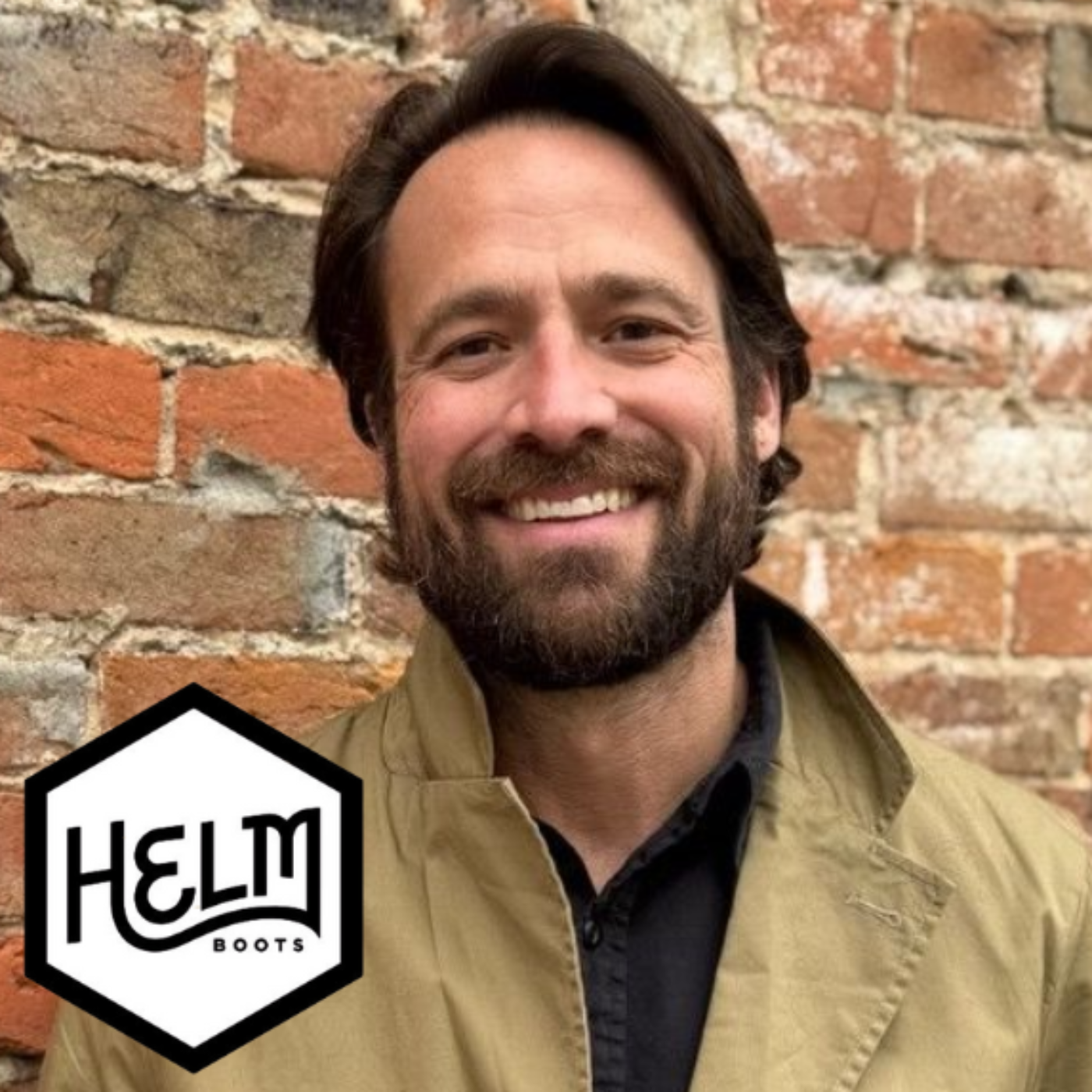
Joshua Bingaman – Founder of Helm Boot
By Justin McCullough
Humble serial entrepreneur tells us about his journey building a boot brand and overcoming challenges along the way. Joshua gives some great advice and calls out that you have to have a little crazy in your eye and be willing to run a race that never ends.
Overview
In the latest episode of the Vision, Values and Velocity podcast, Justin interviews Joshua Bingaman, the founder of Helm Boots, who shares insights from his entrepreneurial journey, which began with a chance meeting in Istanbul. Joshua discusses the challenges of transitioning production from Turkey to the U.S., highlighting the necessity of persistence and creativity in finding American manufacturers. He elaborates on the gritty realities of entrepreneurship, emphasizing the financial uncertainties and the mental resilience required to survive in the business world. Leadership and team dynamics are also focal points, with Joshua advocating for building a passionate team that believes in a shared vision. He offers invaluable advice to aspiring entrepreneurs about the courage to start, the importance of personal sacrifice, and the need for allies during tough times. Closing the conversation, Justin reflects on Joshua's authenticity and the qualities that make effective leadership, reaffirming that inspiring others is essential for successful business growth.
Show Notes
Click timestamps to jump directly to that point in the episode.
- Justin McCullough introduces the Vision, Values and Velocity podcast focused on leadership and business growth
- Interview with Joshua Bingaman, founder of Helm Boots in Austin, Texas
- Helm Boots has a flagship store and dozens of international wholesale accounts
- Joshua started his business after meeting a shoe factory owner in Istanbul while visiting his aunt
- Initially produced boots in Istanbul, but later moved production to the US due to logistics challenges
- Found American manufacturers in Maine and Arkansas by persistently faxing traditional, multi-generational factories
- Joshua describes entrepreneurship as requiring a certain 'insanity' or inner drive
- Not everyone should start a business—it requires vision, mission, and unwavering determination
- Compares entrepreneurial spirit to 'the shining' (referencing Jack Nicholson film)—entrepreneurs recognize it in each other
- Joshua had three previous businesses before Helm Boots
- Describes his business education as 'school of hard knocks' rather than formal training
- Starting a business is easy; surviving and thriving is the real challenge
- Joshua challenges the myth that serial entrepreneurs are financially secure
- Describes cycles of being 'credit poor and cash wealthy' or vice versa
- Has experienced critical moments where he nearly gave up before unexpected opportunities arose
- Has funded businesses through credit cards, lines of credit, mortgaging homes, and selling personal assets
- Emphasizes that financial security is never guaranteed, even for successful entrepreneurs
- Maintains an ability to 'let things burn' to remain agile and pivot when necessary
- Highlights importance of team members who believe in the vision
- Others often 'catch the fire' of the founder's passion and help carry the business forward
- Helm Boots operates with about 15 in-house staff members
- Works with contract factories that employ 80-hundreds of workers
- Maintains a 'tight ship' that can scale up or down as needed
- First requirement is courage to start and perseverance to continue
- Success depends on finding people who believe in you and your vision
- Has had team members leave high-paying jobs to join Helm for less pay because they believed in the company
- Personal sacrifice demonstrates authenticity and inspires others
- Making tough decisions consistently builds character that others recognize and trust
- Justin highlights Joshua's authenticity, empathy, and personal qualities
- Emphasizes themes of perseverance, personal sacrifice, and leadership that inspires others
- Notes Joshua's creative approaches to business challenges (faxing manufacturers, creative financing)
- Highlights the importance of having supporters when 'that flicker of flame is going out'
- Concludes that successful leadership requires vision and the ability to inspire others to join the journey
Show Transcript
Justin McCullough [00:01] – What do you do when it's your turn to lead? Well, that's a great question.
Justin McCullough [00:06] – The Vision, Values and Velocity podcast is.
Justin McCullough [00:08] – All about a better way of thinking and how to get you where you are now to where you want to be as quickly, confidently, and intentionally as possible so you can make an impact at work, home, and life. Hey, this is Justin McCullough.
Justin McCullough [00:25] – And you know what?
Justin McCullough [00:26] – It is my goal to give you the encouragement, clarity, and confidence to tackle whatever your next big thing is, whether that's leading a team, running a business, or maybe starting that big new project. You know what? I'm confident that stories just like this are going to help you along your way. So let's take a look at the leadership traits of Joshua Bingaman, founder and owner of Helm Boots in Austin, Texas. You know, I recorded this interview at Small Business Festival, also in Austin. And so let's just jump right into that interview.
Justin McCullough [01:09] – Joshua, why don't you tell me a little bit about who you are in your business?
Joshua Bingaman [01:13] – Cool. My name is Joshua Bingaman. I have a company here in Austin called Helm Boots, and we're a footwear company. We've got a flagship here and a couple dozen wholesale accounts internationally, actually. And yeah, we're growing fast and make shoes and source and produce everything here in the US that's great.
Justin McCullough [01:37] – So how does that even come about? How do you go from wanting to do some boots and getting multiple distribution accounts and a store?
Joshua Bingaman [01:45] – Good question. I have no idea. No, I'm just kidding. I, long story short, have an aunt in Istanbul. I was visiting her one of the multiple times I was there. Met a guy who had a shoe factory. I had actually had a shoe store in San Francisco. I've had a few businesses and had always wanted to start my own line. And just the relationship with this guy led to, hey, let me give you some of my designs and styles. And next thing you know is order 100 of each style. So there are seven styles, ship them to Austin, and the rest is history. I brought it three years ago, almost four years ago to the US When I was Istanbul. Just the travel and the customs and port fees and everything.
Joshua Bingaman [02:32] – Just got to where, man, I don't know if I can do this overseas. So I just started banging doors down in Maine and Arkansas, where there's the few remaining American shoe factories. And here we are.
Justin McCullough [02:45] – So you just knocked on doors, literally?
Joshua Bingaman [02:47] – Yeah, I called and a lot of them are really old school, multi generational. So I actually faxed a couple of them. Faxed and faxed Until I got a response.
Justin McCullough [02:56] – That's amazing. So I know some of the folks that are watching right now are thinking, you know, I've had an idea for some sort of fashion. And you made it sound like, hey, I just had an idea and I just sort of put it together. So let's fill in the gaps there a little bit, Right?
Joshua Bingaman [03:09] – Sure. I think it's called insanity. Fill in the gaps as in from the thought to doing it.
Justin McCullough [03:16] – Yeah, absolutely. I mean, can anybody just decide they want to do a boot business?
Joshua Bingaman [03:19] – I mean, anybody can decide they want to. And I was talking about that a little on stage. Not anybody can do it. Okay. In point of, like, I don't think just anybody should do it. If you have an idea, if you have the vision, you have the mission, you have the drive, taking that action on it. Not just a lot of people. I want to start a business. Hey, I want to start a boot business, a clothing company. I've heard that a lot. And I don't say it pretentiously, but it's like, yo, if you're going to start it. Stop talking to me about it. Or do you really have it in you? And that's where I'll ask somebody. Where. It's like, man, if you're not willing to kind of run a race that never ends, don't for yourself. I try to save people.
Joshua Bingaman [04:16] – The heartache. If I see that somebody has it in them, if they've got the crazy in their eye, or the Shining, you know, like the old Jack Nicholson where he tells the kid, hey, you've got the shining. I have it, you have it. We can only see it in each other. I feel like that with business owners or with entrepreneurs where it's. It's in. You don't have a choice. Almost you can't. It's like breathing for you.
Justin McCullough [04:41] – It's like a creator's manifesto. Right. I have to create.
Joshua Bingaman [04:45] – It won't stop. I have to build, and if I don't, there's no purpose.
Justin McCullough [04:50] – Sure. Yeah. So obviously you've got some experience with this. This is business number four.
Joshua Bingaman [04:54] – Yes, sir.
Justin McCullough [04:55] – Right.
Justin McCullough [04:55] – So tell us, did the boot business come to life? Did Helm Boots come to life because you had three other businesses, or do you think you could have easily just done that as the first business?
Joshua Bingaman [05:06] – I think the process. That's a great question. I've never thought of that. That's probably why I've started so many businesses. It hits me and it's a fire, and I go. I think I ate enough crow through the ones prior to it and learned enough. Like that was my school of hard knocks or just doing it. I had never. A lot of people do a lot of prep and education and how to write a business plan, everything. I was just running so full speed that there were super big potholes. And I mean, there were some chasms that go down in it and down here on the bottom and climbing up is probably where I learned the most about surviving a business, not just starting one. Because again, that's the thing. It's like, hey, I can start a business.
Joshua Bingaman [05:55] – I can probably convince somebody to invest or I have a rich uncle. It's when you're rounding third base, can you make it home? That's when the business flourishes or grows legs where it doesn't always for people, they'll get it started. And that's not getting it started. That's that. But, man, there's a lot more to it.
Justin McCullough [06:17] – Do you think that. I know right now our audience is thinking, well, he's been successful with three other businesses, so of course he's got another fourth business. He's a serial entrepreneur. He's bankrolling. Right? So let's talk about the reality of, like, how do we pull the finances together? How do we build a business? Are you bootstrapping this or are you mega rich? Let's figure that out.
Joshua Bingaman [06:39] – I'm not mega rich. The reality of it that I don't know if it's like this for all business owners, but I've met quite a few who it is like this until they either hit it or they quit. But I'll be credit poor and cash wealthy, or cash poor and credit wealthy, or I'll just have these kind of flatline moments. But it's always come at like the exact right times where it's like, I'm gonna belly up. I don't know if I can do this anymore. And then something will happen, whether it be a crazy sales or some PR thing, or somebody stepping up and saying, hey, we're interested investing. Like, when that starts coming to you, it's like I'm supposed to keep doing this. Like, I can't quit. I can't stop.
Joshua Bingaman [07:25] – But yeah, the first few businesses, yeah, I would think just diving in, they wet my chops enough to be able to say, I guess I can do this. I mean, it's like jumping in the deep end, to answer your question, where it's like, I didn't know how to swim when I first jumped in, but I've been in it long enough that I'm swimming. It was doggy paddling at first.
Justin McCullough [07:49] – That's right. So no breakaway successes, no free rides, huh? It was all pushing hard.
Joshua Bingaman [07:55] – Yeah. And even when there were those propulsions of success, keeping the cart behind the horse is as difficult. Growth and cash flow is as difficult as crickets and silence. I mean, where it's like, I've had a cafe where we struggle to get people in, and I've had a cafe with a line down the street where we. You can't keep up. Those are both problems. So it's figuring out how to handle the ability to pivot and to change all the time for everything. You need to and have to.
Justin McCullough [08:33] – So, obviously, in our business, we help folks with credit and loans and things like that. Have you ever found yourself in a position like that on your businesses?
Joshua Bingaman [08:41] – Dear God, yes.
Justin McCullough [08:43] – Making payroll or just equipment purchases or whatnot.
Joshua Bingaman [08:47] – I mean, it's gone from lines of credit to credit cards, multiple credit cards, to mortgaging a home, dual mortgage, a home, selling a home, selling cars, those kind of things. Where to someone else, it might seem literally crazy.
Justin McCullough [09:01] – There's a shining showing through, right? Crazy.
Joshua Bingaman [09:04] – You've got it, don't you? There's no security in it. If somebody. I mean, I guess when somebody's like, hey, I'm making millions and millions, but I know business owners like that. Or we have investors like that now who sit on our board and they are restless, or they know that it could be gone tomorrow. But that's how you're able to do it. You don't. You don't rest on your laurels or on the fact that, hey, I've got all this money now. I'm secure. I think the ability to be able to do it and to keep starting and keep going is the fact that, hey, what do you save from your house? If it's burning, it's like, nothing. Let it burn. Or because if you hold on to things too hard, you can't pivot, you can't keep going. You can't be agile.
Justin McCullough [09:51] – Yeah. So I'm hearing a couple things. One, I'm hearing perseverance. I'm hearing some opportunistic. Right. You seized the moment when you saw it right. In these businesses over time, you also pushed through some really tough challenges. It wasn't easy. Right. You've made some really tough calls with your family and your business with financing decisions, the mortgage, the home, all that kind of stuff. Right, Right. So why in the world would we want to be in business. Right. Why do we want to do that?
Joshua Bingaman [10:24] – I think it comes to a point where, like I was saying earlier, when your flame is flickering and dying, something will happen where somebody else will believe in you. Like where then they'll catch it. Or I've had these team members or this person pick me up when I'm done. And without those people, and they usually own other businesses too, or they've caught your fire or your passion and they come in and carry you or join it and just throw fuel on the fire. I've had that happen with all the businesses actually, where it's like, man, I can't do this anymore. And then I look and it's like there's four, five, six people here who are driving it now. Like I'm the captain of the ship, but man, everybody on board the crew is who keeps the ship going.
Justin McCullough [11:18] – That's right. And how many people is in your. In your organization now in helm? Yep.
Joshua Bingaman [11:24] – We've got probably a dozen few managers in the office. Four, five, six managers. But then our factories that we contract with, that's one of them has 80 people. One of them has multiple hundred people. So just in house though, and with our store, I'd say 15.
Justin McCullough [11:42] – 15, right. Okay. So you're able to have a retail footprint and distribution with a relatively small team.
Joshua Bingaman [11:50] – Oh, definitely. And we shrink it when we have to and that's probably max. But yeah, we run a tight ship.
Justin McCullough [11:58] – That's great. So for those folks who are, you know, trying to. As we wrap up sort of in this last question, what I'm really wondering is for those folks that are interested in starting a business with a brick and mortar presence or a distribution presence with some sort of a footprint. Right. That's a. It's an actual location and their product maybe is going out to other locations. What's the advice you would give them as they're making sense of that idea and something that would help them see that they can do it, but that it takes something. What's the something that it takes to do it?
Joshua Bingaman [12:33] – I mean, the first thing would be, I would say would be courage. But in terms of the fiscal or the physical, it's finding someone to believe in you and that you proving that authenticity or showing that authenticity and passion enough for someone to believe in you to open a line of credit or to want to be part of your team, even if it's not. I've had people step down from really high six figure salaries to work for us than a lot less than that. But I'm like, what are you doing here? Why'd you leave this big shoe company to come work for Helm? They're like, there's something here. I want to be part of it. It's growing. I see where it's going to go. And, I mean, it'll bring somebody like me to tears because it's like, you do.
Joshua Bingaman [13:22] – Like, I started this alone, you know, like, what? So I think. I think that would be the thing. Like you were saying, perseverance is gonna be huge, but courage in the beginning, to just get started, is you can't do without it.
Justin McCullough [13:38] – Yeah. So I've got one last question. If it takes courage and belief, how do you get people to believe in you so that you can do it?
Joshua Bingaman [13:46] – I feel like I've had people ask me that before, especially in terms of raising money. Part of me wants to say that it's natural. Not like somebody will be like, leadership is natural. There's the natural aspect of whatever it is that you're doing, if you believe in it or you're passionate enough about it. Because I've lost belief in things I'm doing before, but I'll still come in even if I've lost my game face. People will be like, why is he still coming in? We are late on payroll. Or staff will know I put payroll on a credit card. Like, these have happened. Or Joshua took himself off being paid or took his kids out of private school or whatever it is. That sacrifice proves something. And it's never been intentional for me.
Joshua Bingaman [14:38] – It's like, yo, this is what we gotta do if we're gonna do it. They see that and they're like, well, we're sacrificing too, or we're in for the long haul.
Justin McCullough [14:46] – Yeah. And I think the takeaway there is we've got Joshua here saying that he's made some really tough decisions that a lot of people might walk away from. Right. And to make those decisions repeatedly shows consistency in what your character is. Right. And so people get to see that and say, you know what? I can make this sacrifice because you're making that sacrifice. Right. Well, this has been great. Can you tell people where they can find out more about you and maybe find you online?
Joshua Bingaman [15:12] – Yeah, for sure. Helm H L M boots. B O T S dot com. Helm boots dot com.
Justin McCullough [15:17] – Perfect.
Joshua Bingaman [15:18] – Yeah.
Justin McCullough [15:18] – So I'm Justin McCullough. This is Small Business Festival. Thank you, Joshua.
Joshua Bingaman [15:22] – Thank you, Justin.
Justin McCullough [15:31] – All right, so there.
Justin McCullough [15:34] – All right, so there you go. Joshua Bingaman and Helm Boots.
Justin McCullough [15:38] – You know, I got to tell you.
Justin McCullough [15:39] – I just want to hug that guy, talking to him in person. And we have since followed up several times over the phone and in other contacts. And the dude is just such a nice guy, authentic, believable, understanding, empathetic. Everything that you want in a good friend and yet somehow manages to pull it off with people he almost barely knows. So, anyway, Joshua Bingaman, awesome. You know, in this. In this conversation today, you know, there's a few things that jumped out at me. I hope. I hope some stuff jumped out to you, because, you know, whenever I look at. Whenever I look at this kind of.
Justin McCullough [16:18] – Of a story, you know, here we.
Justin McCullough [16:19] – Have an entrepreneur for four businesses under his belt, traveling obviously all over the world to get to Istanbul, and he decides that's what he wants to do. There's. There's so many themes in here, but we keep coming back to. To throughout the interview, things that sound like perseverance, personal sacrifice, you know, sort of a bigger picture view of what might be possible and being the kind of person that people believe in and want to sacrifice for as they see that sacrifice happening in Josh.
Justin McCullough [16:51] – And so, you know, I think there's maybe something here that, you know, should encourage you around, you know, whether that's knocking on doors or, in his case, faxing people, right, to try to get the help he needs, or being creative with financing or possibly being frugal in how he's hiring or managing the team because it's a relatively small team to run his business. All those things, I think, are connected to the creativity it takes to be successful with a clear vision of where you want to go and the kinds of things you want to do to build a business. But nothing is easy, and you always have to have people that are. That are supporting you both in the company or like you said, when that.
Justin McCullough [17:36] – That sort of flicker of a flame is going out, and the hope and the faith and the expectation that somebody will come alongside you and really lift you up and keep you moving forward so that you can have those positive outcomes that you've barely been sacrificing for and fighting for. And, you know, I think we can find that at work. We can find that in our businesses. I think we can find that in, obviously, if we're an owner, we can find that in some of our key employees who. Who are really just bought into what we're doing, much like we shared with us here. So I sure hope something here was useful to you. I really enjoyed this interview today, and I want to thank Joshua Bingaman and for having that conversation with me.
Justin McCullough [18:15] – And of course, Matthew Pollard, who started the Small Business Festival, for letting me use the audio for the event. And of course, the mysterious Breakmaster Cylinder for the podcast theme that I use here. You know, this has been my show. This has been a little bit about what is on my heart with Vision Values Velocity. I'm glad you're here. You can connect with me, MCC Justin on Twitter. You can go to justinmccullough.com or visionvaluesvelocity.com Thanks a ton for being here. I'll see you on the next one.
Justin McCullough [18:47] – Bye.
« Previous | Next »
Join Our News Letter
Get started today before this once in a lifetime opportunity expires.