Join Our News Letter
Get started today before this once in a lifetime opportunity expires.
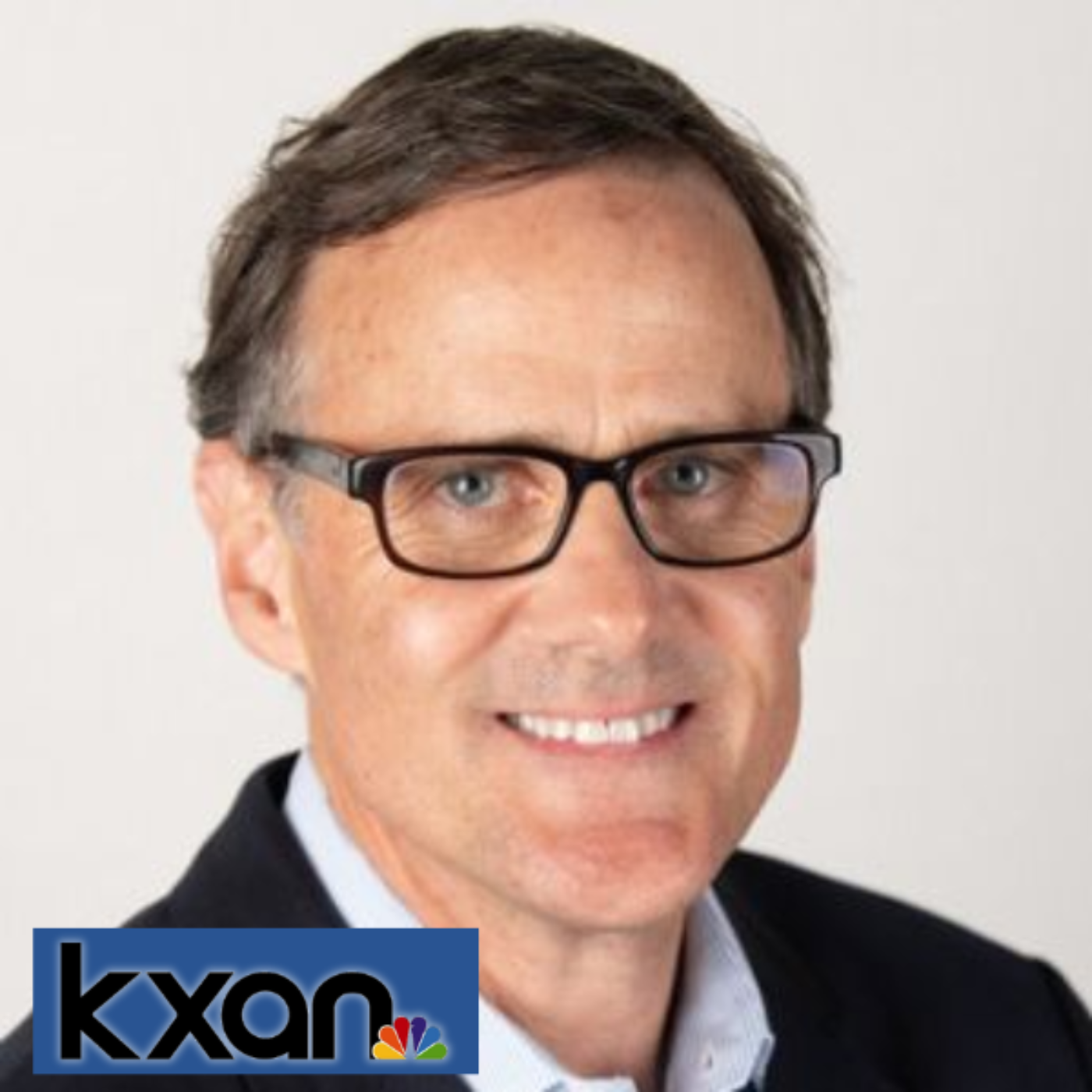
Eric Lassberg – General Manager of KXAN
By Justin McCullough
With more than 100 employees across three stations, the market is competitive and Eric helps us understand what it’s like to run a demanding business while also trying to help all his customers (other local business owners) succeed.
Overview
In the latest episode of the Vision, Values, and Velocity podcast, Justin interviews Eric Glassberg, the General Manager of KXAN, an NBC affiliate in Austin, Texas. The discussion covers Eric's management of three local TV stations and the challenges they face as small businesses in a competitive environment. They explore the significance of storytelling in news, emphasizing emotional connections to engage viewers and enhance marketing strategies. Eric stresses the importance of a consistent marketing approach, suggesting that emotional branding can drive consumer decisions. He also highlights the necessity of owning a specific brand message for business success. As the episode wraps up, Justin reinforces the importance of consistent branding and the podcast's core concepts of vision, values, and velocity, encouraging listeners to develop a clear and compelling direction in their leadership and marketing efforts.
Show Notes
Click timestamps to jump directly to that point in the episode.
- Justin McCullough hosts the Vision, Values and Velocity podcast
- The podcast aims to provide encouragement, clarity, and confidence to tackle leadership challenges
- Today's show features Eric Glassberg, General Manager of KXAN (NBC affiliate in Austin, Texas)
- Eric manages three TV stations: KXAN (NBC affiliate), KMBA (CW affiliate), and KBBA (My Network affiliate)
- The station employs approximately 140 people, classifying it as a small business
- Station faces similar challenges as other small businesses in a competitive marketplace
- Focuses on two key functions: storytelling through news and helping businesses grow through marketing
- The station has been telling local stories since 1965
- Emotion is key to good television stories
- News stories focus on local community with viewer value
- The newsroom looks for stories with emotional impact about people and products
- Getting one news story is not enough for business success - consistency is required
- Businesses need consistent marketing plans executed over years
- TV is described as 'the most effective way to communicate emotion'
- Emotional connections drive purchasing decisions
- Video can be obtained through:
- News coverage (business loses control of how it's presented)
- Hiring the station's production team
- Using external agencies or specialty shops
- Facebook Live options
- The most important marketing concept is owning a single word or concept
- Examples: 'FedEx = overnight,' 'Volvo = safety,' 'KXAN = investigates'
- Consistent focus over time is crucial for business success
- Eric sees partnership and community relationships as key to station success
- Justin emphasizes the importance of consistency in branding
- Warns against 'sending a ransom note' with inconsistent messaging
- Discusses the podcast's core concepts:
- Vision: must be attainable, sustainable, and compelling
- Values: serve as guardrails for decision-making
- Velocity: speed in a single direction with acceleration
- References website (visionvaluesvelocity.com) and Twitter handle (MCCJustin)
Show Transcript
What do you do when it's your turn to lead? Well, that's a great question. The Vision, Values and Velocity podcast is all about a better way of thinking and how to get you where you are now to where you want to be as quickly, confidently and intentionally as possible so you can make an impact at work, home and life.
[00:20] – Justin McCullough
Hey.
[00:21] – Justin McCullough
Hey. This is Justin McCullough. This is my show. Thanks for being here. You know, it's my goal to give you the encouragement, clarity and confidence that you need to tackle whatever your next big thing is, whether that's leading a team, running a business, or taking on that big new project, or maybe it's something else and we should talk about it. You know what? I'm certain that these are going to be helpful stories to you. And for today's show, I want you to look at the leadership traits of Eric Glassberg. He's the general manager of KXAN, which is one of the TV stations here in Austin, Texas. So take a look and listen close, and I'll see you on the other side.
[00:59] – Justin McCullough
Hey, this is Justin McCullough with Capital One Spark Business, and we're at the Small Business Festival and I have Eric with us. And you're one of the major media outlets here. Why don't you tell us a little bit about who you are and your station?
[01:09] – Eric Lassberg
Yeah, I'm general manager of KXAN and it's the NBC affiliate here in town. We also have KMBA, which is CW affiliate, and KBBA, which is My Network affiliate. So three TV stations.
[01:20] – Justin McCullough
Three. Does that keep you pretty busy?
[01:22] – Eric Lassberg
Yeah, it does.
[01:23] – Justin McCullough
I have a question. Do you consider yourself to be a small business?
[01:26] – Eric Lassberg
Yeah, yeah, we're for 140 people, so it's pretty small, relatively speaking.
[01:31] – Justin McCullough
So do you feel like you have the same challenges as other small business owners?
Yeah, we do. I mean, it's, you know, it's a competitive marketplace and we have to market ourselves as aggressively as possible given that survival of the fittest, et cetera. So. Yeah, and I mean, small business is what we approach in many different ways to try to help them do what they need to do to grow their business, because that's the business we're in.
[01:54] – Justin McCullough
Sure, yeah. So I would imagine you work with small business owners in a couple way. Right. One way is you cover them in a reporter fashion.
[02:01] – Eric Lassberg
Right.
[02:01] – Justin McCullough
Get them on the news. The other way is they can do some advertising with you. Right. Are there any other ways?
[02:07] – Eric Lassberg
I mean, really, we are in the storytelling business. We're a news operation and we are in the develop and grow small businesses business because that's what we do with our advertising teams and our marketing teams. So it's really just two fronts. We're trying to build our news brand one front and then we're trying to be a best in class marketing solutions organization for small businesses in the market that we've been in since 1965.
[02:34] – Justin McCullough
That's great. So let's sort of split that into two ideas. So the newsroom side of that is you guys are trying to cover stories. You've got a lot of stuff going on. You've got airtime. Is this a big black box? Is this a scary thing in the newsroom or should small business owners see you guys as accessible and what's going on in the newsroom?
[02:49] – Eric Lassberg
No, I mean in the newsroom, we're trying to tell stories about the village. So, I mean, there is no black box. There's nothing scary about it. We have been in this market since 1965 telling stories about the local community. We want to make sure that there's viewer value with all our stories. We want to make sure that everything that we do is community and locally focused.
[03:07] – Justin McCullough
So what is a good story?
[03:08] – Justin McCullough
What are the pieces of a good story in television?
[03:11] – Eric Lassberg
We really like emotion. So if you have a small business and you have this product that just creates total bliss and you cry every time you use it, that would be great TV.
Have you seen that product?
[03:23] – Eric Lassberg
No.
[03:24] – Justin McCullough
No. Okay, so that's a very aspirational story.
[03:26] – Eric Lassberg
That would be an extreme example to make a point.
[03:28] – Justin McCullough
Yeah.
[03:28] – Eric Lassberg
Yeah, that's great though.
[03:29] – Justin McCullough
Okay, so. So what I'm picking up though is a story counts. And as these small business owners are thinking about their business and what they should talk to you guys about if they can see a story, right, Something that maybe has some emotion, some conflict, something that's not only newsworthy, but interesting. That's really what you're saying.
[03:45] – Eric Lassberg
Interesting emotion about people. You know, we're going to want to tell a story about how it feels affects this person, your product and service, whatever, and show the emotional, you know, reaction to that product or service, how it originated. You know, the, you know, the behind the scenes. You know, like you see when the Olympics comes on, the behind the scenes, how the athlete got to this point, you know, the behind the scenes of how this story goes, of how this person founded this company and what they're doing and the passion behind the product.
[04:13] – Justin McCullough
So something just popped in my head, like if they can get that story and it sounds like it's kind of difficult, right?
[04:19] – Eric Lassberg
It is incredibly difficult.
[04:20] – Justin McCullough
Part of it is it story. Is it a story? Right. Just because you approach it doesn't mean it's a story. And if it was a story and you guys are able to cover it, is that it? Have we won? Is that all it takes?
No, no, it doesn't. Can you imagine like somebody, an advertising agency talking to a business and going, all you need to do is be in the 6pm news once and you're golden? It doesn't work that way.
[04:38] – Justin McCullough
I haven't seen it work that way.
[04:39] – Eric Lassberg
No. You got to have a media plan, a marketing plan. So I just make sure you have a marketing plan that's consistent, that you have to execute it for years and years and then maybe you're successful.
[04:51] – Justin McCullough
Okay, so let's assume that some of these folks are. They've already gotten on the journey. They know their product, they know their business, they maybe done some story pitches, it hasn't worked out for whatever reason, and they just really believe that something out there will work. Why? Why video? Why tv? Why you guys? I mean, not necessarily directly your station, but like, what if I go into this advertising arena, what's that going to do for my small business?
[05:18] – Eric Lassberg
Yeah, yeah. And it's, I mean, it's not just about tv, but yeah, I mean, TV has a great value proposition and that it is the most effective way currently in our world today to communicate emotion and, you know, and people purchase. People's purchasing decisions, we all know, are really emotionally based most of the time. So it's like if you really, I mean, you think about all the most powerful ads that you can think of, every one of them usually are on the television side. You think of the super bowl or whatever. So I mean, it doesn't have to be a Super bowl level commercial, but it still is the best vehicle to communicate an emotion and get an emotional response from your potential customer.
[06:03] – Justin McCullough
So let me ask you this. I'm sure there are a few different ways that somebody could get some video on air. Could you maybe give me a couple of examples? That video could be done outside of the station and video could be done in the station and they both wind up with your station. Can you help our listeners understand sort of how video works and how you guys consume it to get it on air?
[06:21] – Eric Lassberg
Yeah. I mean, for one, are you talking about just like we go out and we have a news store, you're going to get video about your company that way. So we're covering the opening of your business for Whatever reason, the ribbon cutting, whatever. All right. And there's video and there's. But you lose control of that. Right. As the business owner, it's really up to us how we present it and edit it and etc. And then there's, of course, just, you know, you have your marketing plan, which is crucial for the success of any business. And part of that marketing plan includes video. Right. Because you want to use video for your commercials of your ad campaign. And so you can use television as that or you can use digital. Right. So you can, you know, do pre roll or whatever. So those.
[06:58] – Justin McCullough
How do we go about getting that done? How do I go from. I had this idea it should live in a video form. You know, do It with my cell phone? Like that's what we actually get the production done.
[07:09] – Eric Lassberg
Yeah. And that's where you would contact our organization, for instance, could do that. Or you know, there's a lot of different organizations that can do that, but you know, I'm obviously familiar with ours, so we can do that.
[07:19] – Justin McCullough
Right. So I'm going to highlight a few and you tell me if I miss them. I know for a fact, Right. That we can get an agency that has a crew. We can get the station who has a crew. This is what you guys do. You guys have for hire variant video. Right, Right. So it's not just if you get a reporter out and then there are other specialty shops. Right. That. That's what they do. Is there anything else? Yep. Anything else besides that?
Not that I can think of right now.
[07:39] – Justin McCullough
Okay. What about Facebook Live? What do you think about Facebook Live?
[07:42] – Eric Lassberg
We do it.
[07:43] – Justin McCullough
Yeah.
[07:43] – Eric Lassberg
Yeah, we do it. We produce video for Facebook Live or with our morning news team, you know, doing that. Yeah, we've done that before.
[07:49] – Justin McCullough
That's great.
[07:49] – Eric Lassberg
Yeah. But that would be something where you could. We would. We have the capability to, as our organization, to give. You produce Facebook Live for your actual campaign.
[08:00] – Justin McCullough
Yeah.
[08:00] – Eric Lassberg
So.
[08:01] – Justin McCullough
Yeah.
[08:01] – Eric Lassberg
Yeah.
[08:01] – Justin McCullough
So what I'm picking up on is emotion matters.
[08:04] – Eric Lassberg
Yes.
[08:05] – Justin McCullough
Don't just trust in the one story thing. That's kind of maybe a little bit of a Hail Mary idea.
[08:09] – Eric Lassberg
Consistency.
[08:10] – Justin McCullough
Yep. Consistency matters. And the advertising side, although we're not saying the big A word for advertising, but really that's what we're talking about is a marketing plan is consistent, which means over time we're going to continue to do something effectively. And I heard you say at the beginning that you thought advertising on television was a very effective way to get the message out.
Right.
[08:29] – Justin McCullough
And you can control that Message it is.
[08:31] – Eric Lassberg
But in general, with any media, just there's one more key component I would say is a focused message.
[08:38] – Justin McCullough
Great. What is a focus message?
[08:40] – Eric Lassberg
Singular focus one concept, or even if you could even distill it down to one word that you as a company want to own. I'll give you an example. FedEx overnight Volvo safety, KXAN investigates and we own that word. I mean, when you think of KXAN, you think of Investigates and you think of FedEx, you think of overnight. So you just want to distill your value proposition into one word if you can. And if you can really own that word in the mind of the consumer. That's the essence of marketing.
[09:13] – Justin McCullough
Yeah. And then that's great.
You win.
[09:16] – Justin McCullough
Thank you so much for coming and sharing your knowledge. It's obvious that we need to encourage these small business owners to have a marketing plan to be consistent, to not just rely on the one story hope, but to just trust in being able to tell a single one message that they can own over a long period of time. They'll see that success, right?
[09:32] – Eric Lassberg
Yep.
[09:32] – Justin McCullough
Okay. Well, this is Justin McCullough and this is Small Business Festival. Thank you so much, Eric.
[09:36] – Eric Lassberg
Yep. Thank you.
[09:46] – Justin McCullough
Wow. So this is a really great episode.
[09:48] – Justin McCullough
For small business owners who are sorting out their marketing and their advertising and things like that. And I want to bring you into a couple of ideas around vision and velocity in this one. So Eric, obviously very knowledgeable. The station's been well rooted. Company size, 200 plus employees, very much sees himself as a small business owner as well and is completely there to serve the community with stories and serve the community of small business owners with successful marketing as it relates to using the television station. And some of the pieces of the interview maybe don't draw this out, but it's clear that he sees very much a partnership and a community relationship around him as a part of how they're successful and how they win in the midst of other alternatives to do similar kinds of things.
And so Eric did a great job, I think, with that. And of course, the nugget there at the end of getting a velocity in your business by having consistent focus over time and trying to own a single word like FedEx, having the word overnight being owned by them, you know, that's really true and helpful. And if you happen to be a small business owner, that should really speak to you because consistency over time is important. I used to call it don't send a ransom note. Right. Don't have a lot of different voices, don't have a lot of different looks, don't have a lot of different things you're trying to come across as because that kind of looks like a ransom note.
[11:10] – Justin McCullough
And Eric has really nailed it with the focus, a singular focus on a one word and being able to do that over time. So I hope something here has been useful to you and helpful to you. And the whole point of this show ultimately is to help you get your mind wrapped around velocity and what it is that you're doing using vision and values. And so I just want to remind you that vision is. It's really important for it to be attainable, sustainable and compelling. That's how people stay connected to it. That's how you get the follow through that you need. And values ultimately is just the guardrails for your decision making. So that can be for yourself and your team.
[11:45] – Justin McCullough
And the more the values are known or understood, the more clear people's behaviors will be as they align to those values and as you true up to those values. So those values are actually very important to keep your tribe moving forward. And ultimately velocity is simply just the speed in a single direction with acceleration. And so you can't do that if you're moving on a bunch of fronts and you're going a bunch of different directions, which brings you back to the importance of vision. So I hope that's been helpful to you today.
[12:11] – Justin McCullough
And if this is something you'd like to learn more about, go to visionvaluesvelocity.com you can also connect with me on Twitter MCC Justin and visit the website justin mccullough.com and you know what, I want to thank Matthew Pollard, the creator of Small Business Festival, for letting me use this audio clip for that festival. And you know what? Braid Master cylinder for the cool theme that I use on this. Anyway, it's been great having you here and I will talk to you on the next one. Bye.
« Previous | Next »
Join Our News Letter
Get started today before this once in a lifetime opportunity expires.